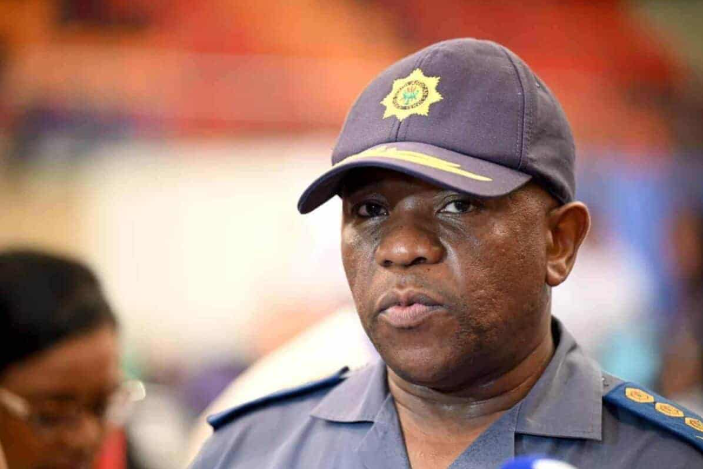

It seems there's some surprise within the ANC, particularly at Luthuli House, regarding Lieutenant-General Nhlanhla Mkhwanazi. The concern appears to be how he passed the party's vetting processes, which are reportedly designed to assess both party loyalty and a certain tolerance for "questionable ethics," often seen as prerequisites for advancement within the party's deployed cadres.
There's a sense of bewilderment when they observe the KwaZulu-Natal police commissioner, as he seems to be fulfilling his official duties as a police officer rather than what some might perceive as the actual role of a deployed cadre, which would be to protect party members.
It's been a long-standing accusation that the ANC has systematically filled the ranks of law enforcement and the judiciary with individuals whose primary goal is to obstruct justice. The result, whether due to intentional perversion or gross incompetence, remains the same: no senior ANC figure has faced prison time for corruption or theft. As someone who once carried a machinegun in the bush, I'll state my bias upfront: I'll always trust a soldier over a politician.
It's crucial to remember Mkhwanazi's background: he's a soldier at heart. His training includes serving as an operator in the SA Police's elite Task Force, a unit known for its incredibly tough selection process, often compared only to the army's Recces. He's also a qualified paratrooper, further underscoring his specialized skill set.
Some observers certainly detected concerning echoes of coup plotting, and admittedly, Mkhwanazi's on-camera demeanor did bear a resemblance to the African military strongmen who've frequently overthrown governments since decolonization swept the continent in the 1960s.
However, there's no denying that South Africa has been overrun by criminals, and reclaiming it will demand a ruthless counter-offensive. Mkhwanazi appears to be doing just that. The rising body count attributed to his units in KwaZulu-Natal suggests he believes in fighting fire with fire, where the end justifies the means.
This raises a critical question: Is he orchestrating "death squads" carrying out extra-judicial executions, or is he simply instructing his officers to defend themselves? Most South Africans, if asked today, would likely lean towards the latter.
As a soldier, he's assessing the situation directly: that politicians at the highest levels are entangled in a vast criminal syndicate that, effectively, controls the nation.
His outspoken attitude, interestingly, mirrors that of another ex-soldier, Major-General Bantu Holomisa, who is currently the deputy minister of defence. Holomisa was expelled from the ANC after raising uncomfortable questions decades ago about corruption.
He went on to set up his own party, the United Democratic Front, and is still a sworn enemy of graft. Mkhwanazi, as a military man, would know the importance of the propaganda component of any war… and he has got in the first shots.
He would also know the importance of timing – and his enemy, the ANC hierarchy, is probably at its most vulnerable now.
We wait with interest to see whether our former ruling party’s bosses will embark on a counterattack.